
Artificial intelligence may be rewriting the rules of technology – but it’s also colliding with a very old limit: electricity.
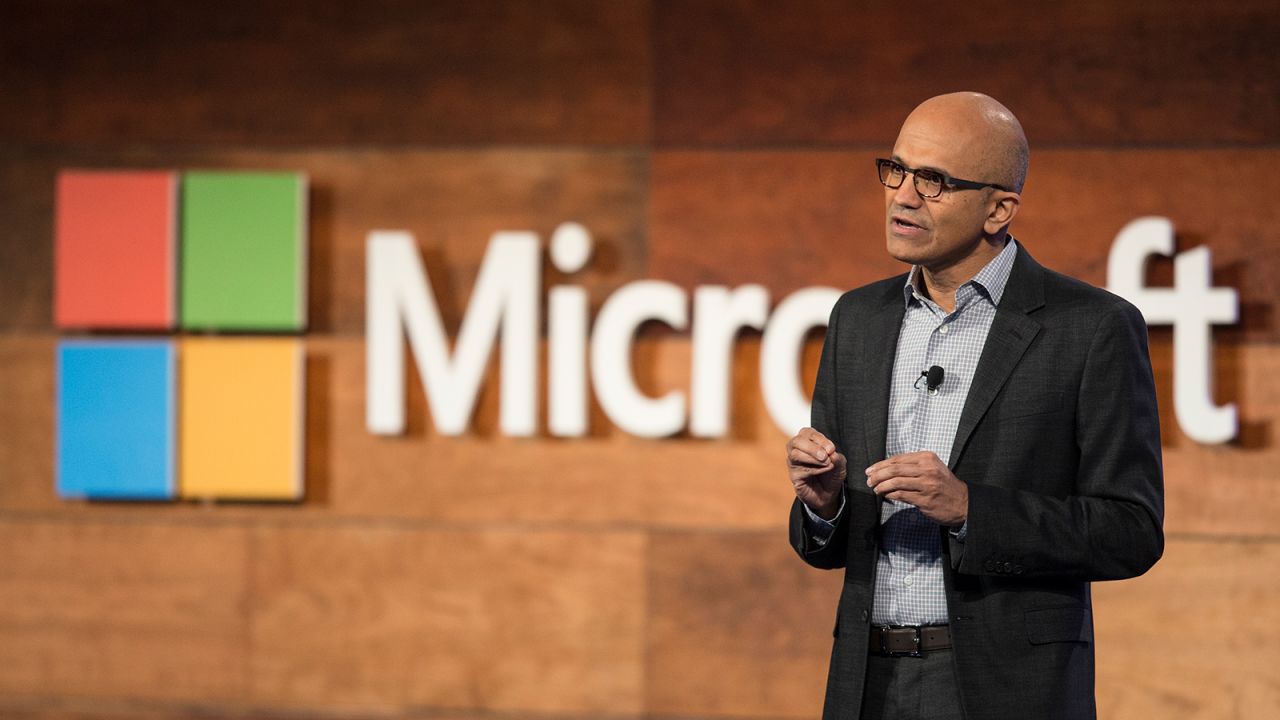
In a recent Bg2 Podcast discussion with investor Brad Gerstner and OpenAI CEO Sam Altman, Microsoft’s Satya Nadella made a startling admission: “The biggest issue we are now having is not a compute glut – it’s power.”
Too Many Chips, Not Enough Power
According to Nadella, Microsoft currently holds some of the world’s most advanced GPUs “sitting in inventory that I can’t plug in.” The reason isn’t supply-chain delay or manufacturing backlog – it’s energy. New data centers are being built faster than the electrical grid can sustain them. As Nadella bluntly put it, “I don’t have warm shells to plug into,” referring to unfinished facilities that lack sufficient power and cooling.
This rare moment of honesty from one of the world’s most resource-rich companies has become a wake-up call across the AI ecosystem. Even tech giants like Amazon Web Services and Google are slowing down their expansion, negotiating with utilities to manage power loads, and postponing large-scale deployments.
“AI won’t be limited by algorithms or chips – but by the energy that keeps them alive.”
— Green AC&DC Energy™
A Global Energy Crunch for AI
The International Energy Agency (IEA) now projects global data center electricity demand to surge nearly 50% by 2030, reaching 945 TWh, roughly 3% of total world power consumption. In the U.S., Goldman Sachs expects data center load to skyrocket another 50% by 2027, while in Ireland, nearly one-fifth of all electricity is already consumed by server infrastructure.
These figures highlight an unavoidable reality: the AI revolution may not be limited by algorithms or chips – but by the physical energy required to keep them running.
From Bubble Talk to Power Reality
While some analysts debate whether AI stocks are in a bubble, others point to a more structural challenge. As one strategist put it, “eventually this CAPEX growth will slow – not just from demand saturation, but from energy capacity limits.” This means that the next phase of AI’s growth won’t come from adding more chips, but from using energy smarter.
The ΔE Solution: Turning the Power Wall into Progress
This is exactly where Green AC&DC Energy™ steps in. Our initiative connects AI efficiency with real-world energy intelligence (ΔE) – transforming wasted watts in hotels, retail refrigeration, and households into verifiable energy savings. By measuring, verifying, and scaling these ΔE results across Europe, we can offset and surpass AI’s growing electricity use, creating a net-positive balance between digital and physical energy.
As Satya Nadella’s admission makes clear: The next frontier of AI innovation will depend on how intelligently we manage power. At Green AC&DC Energy™, we believe the answer lies not just in smarter chips – but in a smarter planet.
Legal Disclaimer and Source Attribution
This article summarizes and comments on publicly available statements made by Satya Nadella (Microsoft CEO) during the Bg2 Podcast discussion with Brad Gerstner and Sam Altman (OpenAI). All quotations are used under the fair-use principle for informational and analytical purposes with full source attribution. No copyrighted media, photographs, or proprietary materials are included in this publication.
The interpretations and opinions expressed herein are original analytical commentary prepared by OneWorldOrder.eu within the Green AC&DC Energy™ framework. They do not represent Microsoft Corporation, OpenAI, or any other mentioned entity.
Readers are encouraged to consult the original sources for full context: Bg2 Podcast (Brad Gerstner, Satya Nadella, Sam Altman) and TheStreet.com article ‘Microsoft CEO Drops Blunt Truth on AI’ (November 2025).